



A wooden floor lives well where humans live well. Here is some useful advice to give your clients to protect their parquet against excessive humidity in the summer
Fabio Braga
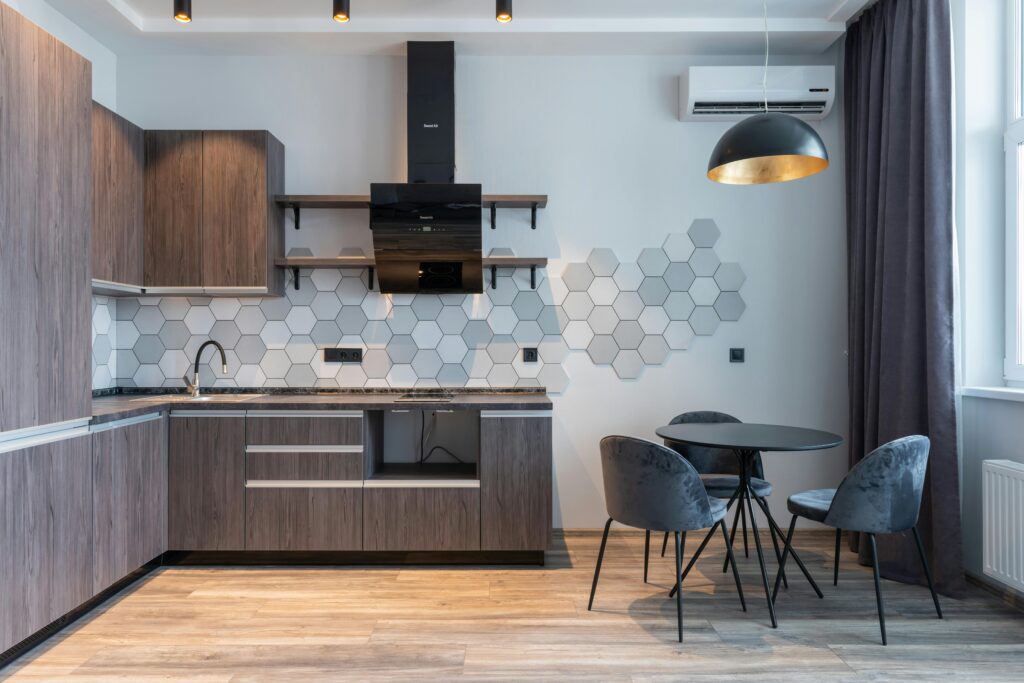
The beauty of parquet lies in its naturalness, its identity as living matter which breathes and changes along with its owner.
A wooden floor is sensitive to light, which speeds up oxidation, to wear and tear and to heat sources. But the real sworn enemy of parquet, whether layered or solid, is humidity, which can have hidden effects both during the winter and in summer.
So, here is some advice to give your clients before the summer season, or even during it (better late than never!).
Before reaching for the air conditioner on switch, which we have needed to do particularly in recent years with the very hot summers we’re having from north to south, let’s remember our dear, old cosy wood parquet.
The ideal microclimate
The important thing to remember is that a wood floor likes the same living conditions as human beings. The ideal climate for parquet is the ideal climate for the person who lives with it, that is humidity between 45% and 65% and a temperature between 18° and 25° C.
A house with an ideal interior climate will be good for its inhabitants as well as for its solid or prefinished wood floor. Prolonged exposure to excessive humidity which tires us out will also have consequences for the parquet.
How does a wood floor behave?
A wood floor tends to absorb the moisture in the air and this causes the wood to swell if excessive.
In winter, heating systems can dry out the air enough to affect the tile joints (which tend to shrink).
In summer, on the other hand, careless use of air conditioning can create a “tropical” microclimate inside the house which can deform the parquet. This happens because air conditioners cool the air with gas which is then recycled using a fan with no control over the average temperature or the amount of humidity in the environment.
How to monitor humidity and take any necessary action
To keep parquet beautiful over time (and guarantee customer satisfaction, so that they come back to us for maintenance or for their house in the mountains), we should tell our clients to monitor the humidity in the house.
It is possible to use a hygrometer, often used at weather stations, for domestic use.
To influence environmental conditions and optimise them, it is advisable to use a dehumidifier, which captures the humidity in the air.
There are also appliances available which can do the opposite too, to combat winter dryness. However, the best solution for keeping a house at a constant temperature and humidity is an indoor climate control system, which as well as cooling the air filters it and is connected to a thermostat for temperature control.
Quality is the key
In the final analysis, we need to remember that the characteristics of the parquet itself, as well as the environmental conditions influence how it will react to humidity. A quality floor, laid in the right way will resist critical conditions better.
You can also remind your clients of this. In any case, if temperature and humidity are controlled in hot weather, parquet will resist and keep its beauty for a long time as well as helping to insulate the house from the exterior heat.
Remember!
The important thing to remember is that a wood floor likes the same living conditions as human beings.
The ideal climate for parquet is the ideal climate for the person who lives with it, that is humidity between 45% and 65% and a temperature between 18° and 25° C.